stativa(7) · ai/ml engineering · bucharest

AI systems, built with intentional design.

Dan Stativa — AI/ML Engineer & Backend Developer

Dan Stativa
The author. Bucharest, 2026.
Abstract

I work across AI/ML and backend systems — data pipelines, ML models, and reliable APIs. This site collects a few notes, project results, and practical experiments around retrieval, inference cost, software systems, and measurement.

Dan Stativa
The author. Bucharest, 2026.
0+ years shipping
0+ projects completed
0+ happy clients
0+ languages, fluent

second pass — zero-framework lite shell

Fig. 1 — This site, measured. No framework, self-hosted subset fonts, hand-tuned CSS. Method: the on-site SEO workout. Second pass: jQuery, GSAP, and the preloader removed from every public page.

Notes and essays

A small map of writing about AI systems, retrieval, measurement, infrastructure, and the costs behind GenAI work.

Fig. 2 — Map of the writing: 33 essays, 8 threads, one closing hub. † = 4 forthcoming. View all insights →

A small EV+ calculator

A simple model for comparing GenAI request strategies by business value, inference cost, and risk. Drag the slider to see how the values change.

EV = ptask·bv − cost − risk − review    ptask = p·rsteps−1    risk_reserve = $0.05    review = gates × 30s at the reviewer rate

p(task) at 1 step: A 0.0% · B 67.0% · C 67.0%

A · no retrieval −$0.052 best
B · RAG +$0.230 best
C · router +$0.230 best

At $0.42 business value, retrieval flips EV positive; fine-tuning breaks even after 106 requests.

Your numbers
EV / month
+$9,188
review load
0 h / month
break-even
106 requests
verdict
ship it
payoff matrix — EV per request by request type × strategy (published values, bv fixed per type)
request type small modelRAG + midlarge reasoning
password reset +$0.031+$0.025−$0.018
policy question +$0.012+$0.146+$0.091
account exception −$0.041+$0.064+$0.173
Fig. 3 — Interactive. A task only succeeds if every step does, so raising steps compounds failure faster than any model upgrade recovers it. Gates buy that reliability back and bill it to a person. Full derivation in the EV+ series; the step model is from Your Agent Is a Contractor.

Three projections, worked

The same model at three settings — the line under which nothing ships, the case that was actually measured, and the one where value and step count both rise. Open a card for the arithmetic.

Two thin wires crossing an empty overcast sky, a metaphor for a margin with nothing underneath it

the floor

Break-even

$76 per month at 40k requests

business value
$0.08
EV / request
$0.002
break-even on $20
556 req
How this is calculated

The floor is not a number you pick. It is one you solve for. Set EV to zero and read off the business value that gets you there.

EV = p·bv − cost − risk. The router costs $0.0017 a request and carries a $0.05 risk reserve, so $0.0517 leaves before any value arrives. Retrieval answers 67.0% of requests, so each dollar of business value returns only 67 cents of expected value.

bv = ($0.0017 + $0.05) / 0.67 = $0.0772

Below that, nothing ships. Above it you are technically positive and practically exposed: at $0.08 the router clears $0.002 a request — $76 a month at 40,000 requests, less than the cost of the meeting where you argue about it.

So break-even is not a target. It is the line under which the conversation should stop. Anything within a few cents of it gets erased by the first assumption you got wrong — a lower success rate, one more retry per request, a support ticket nobody counted.

Notice which term dominates. At the floor the $0.05 risk reserve is 97% of the cost side and inference is a rounding error. Cheaper tokens will not move this line. Only a more valuable request will, which makes “what is a solved request actually worth?” the first question, not the last.

Photo by Asti Wahyuningtyas on Unsplash.

A flight of plain concrete stairs rising in even treads, a metaphor for a margin that repeats without drama

the measured case

Good

$9,188 per month at 40k requests

business value
$0.42
EV / request
$0.230
break-even on $20
106 req
How this is calculated

$0.42 is the measured value of a solved request in the EV+ experiment — a support answer that would otherwise cost a person a few minutes. At one step, that is the whole model.

EV = 0.67 × $0.42 − $0.0017 − $0.05 = +$0.230

Every retrieval-backed request returns 23 cents. At 40,000 requests a month that is $9,188. The no-retrieval baseline stays negative at −$0.052, because a strategy that answers nothing correctly still pays inference and still carries risk.

The number that matters is not the margin, it is the payback. Fine-tuning cost $20 and lifted p(success) by 0.45, so each request gains 0.45 × $0.42 = $0.189, and $20 / $0.189 = 106 requests. The investment is repaid before lunch on day one; everything after is surplus.

This is the shape most projects actually have — unremarkable per request, decisive at volume, and robust enough that halving the success rate leaves it positive.

The cost side barely matters at this value: $0.0517 of cost against $0.281 of expected value. The levers are p(success) and business value, not the price of tokens — which is why the router beats RAG by a hundredth of a cent and nobody should spend a sprint on it. It will not, however, survive a human gate: one $0.50 approval takes this to −$0.270.

Photo by Ricardo Gomez Angel on Unsplash.

A wide green valley seen from a high ridge, a metaphor for a margin broad enough that the decision stops being close

high value, many steps

Very good

$23,294 per month at 40k requests

business value
$1.00
EV / request
$0.582
p(task) over 12 steps
63.4%
How this is calculated

High-value work tends to be multi-step work, which is where the step model starts to matter. A request worth $1.00 — a contract question, a reconciliation, something that replaces twenty minutes of an analyst — runs 12 steps rather than one.

At 99.5% per step, the 11 steps after the answer survive at 0.995 11 = 94.6%, so p(task) falls from 67.0% to 63.4%.

EV = 0.634 × $1.00 − $0.0017 − $0.05 = +$0.582

That is $23,294 a month, and the $20 one-off repays after 45 requests.

Note what did the work. Value per request rose 2.4× and the margin rose 2.5×, because reliability cost almost nothing — 99.5% over 12 steps is still 94.6%. Run the same 12 steps at 95.0% and you get 56.9%, p(task) 38.1%, and a margin of $0.329 — a 43% cut from half a point of per-step reliability. At high value and many steps, reliability is worth more than the model.

Margin this wide also buys the one thing the cases above cannot afford: a human in the loop. A single approval at $60/hour for 30 seconds costs $0.50 a run, and this work still clears $0.082 after paying it. The $0.42 case does not survive that gate at all. If you want a person on the irreversible steps, the way to afford them is to raise the value of a request, not to shave the inference bill.

Photo by Uta Scholl on Unsplash.


Tools I use

A practical view of the languages, infrastructure, search tools, and ML libraries I use or study regularly.

Python daily · ai/ml
PHP production · 10y
TypeScript learning · ui
Scala production · spark
Golang learning · backend
Docker daily · infra
Apache Solr production · search
Elasticsearch production · search
Spark/ML production · ml
PyTorch learning · models
CUDA learning · systems
LangChain learning · agents

Ways I can help

Most work starts with a clear problem, a small prototype, or an existing system that needs careful improvement.

01AI/ML Engineering

Predictive models, data pipelines, inference economics, and production ML systems for real workloads.

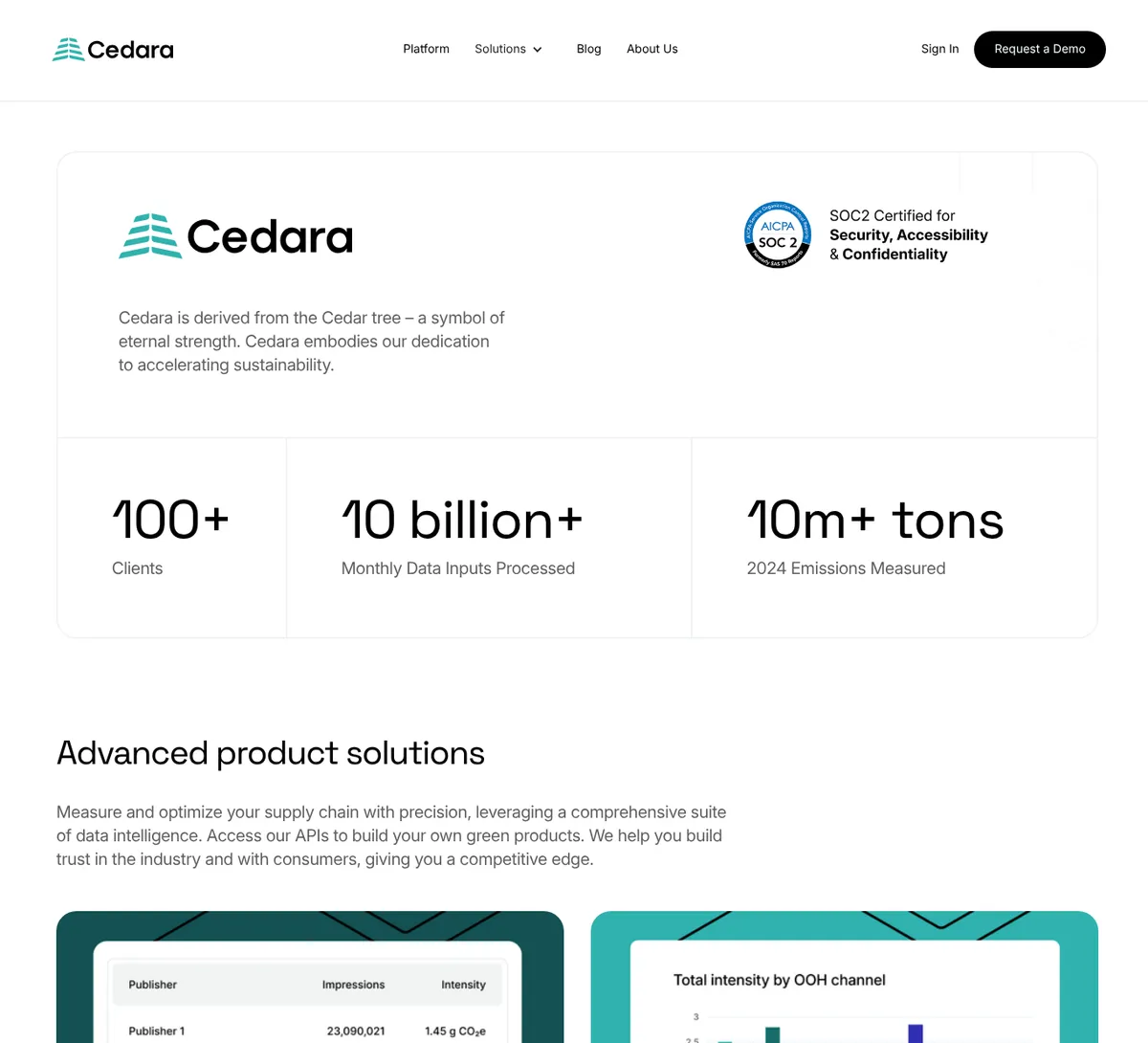
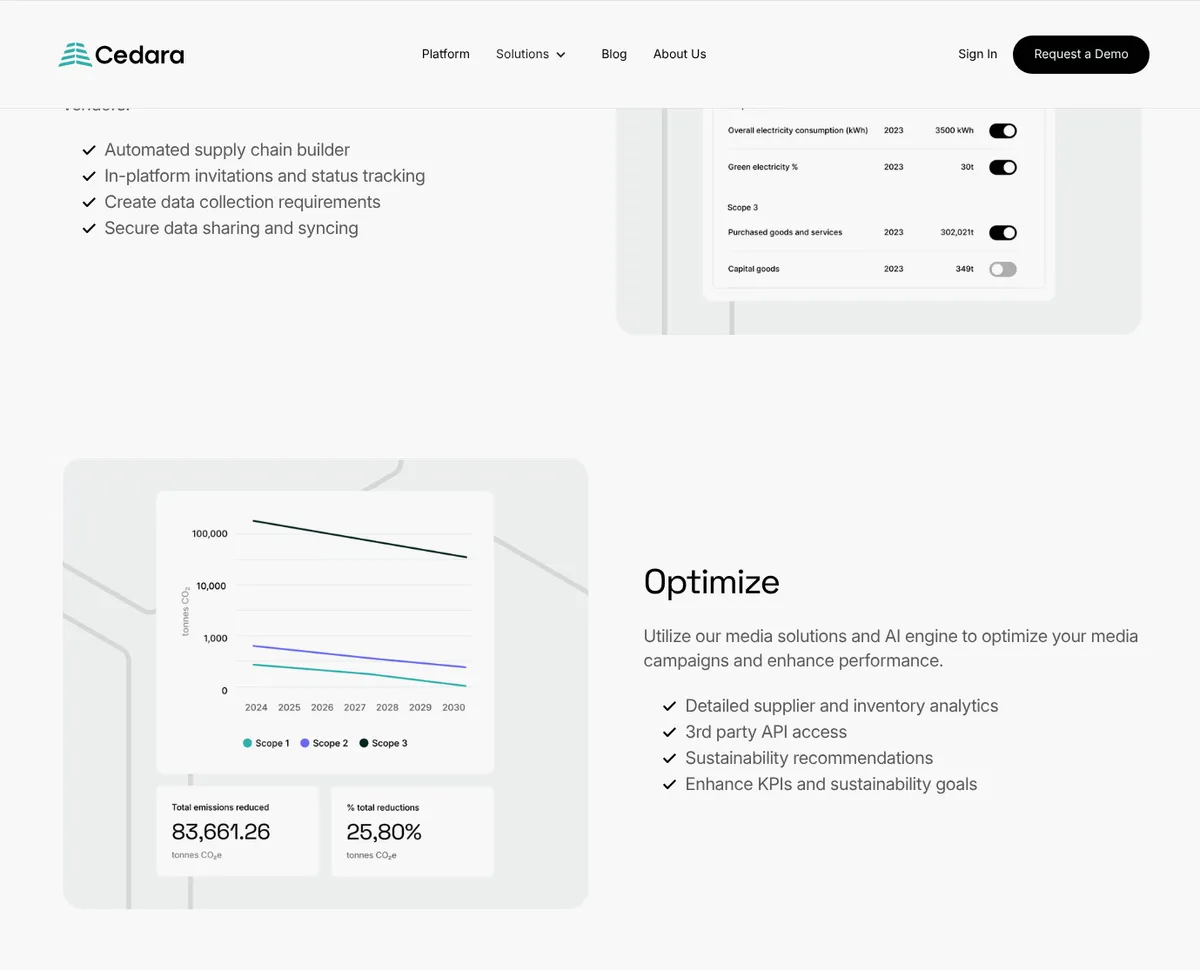
Cedara carbon intelligence platform Cedara supply chain data collection interface Cedara emissions optimization and AI engine
  • Moved an advertising optimization PoC toward production-grade Scala/SparkML on Google Cloud Dataproc.
  • Built supporting Laravel, Livewire, PostgreSQL, Airflow, BigQuery, and Cloud Run data workflows.
02Backend/API Systems

REST APIs, microservices, batch processing, and reliability work for products that need to keep moving.

Bandai Namco Retro Wonder Park project Bandai Namco API architecture screenshot Bandai Namco game backend screenshot
  • Built a RESTful API from scratch for Retro Wonder Park, covering player state, backend gameplay, and integration flows.
  • Defined endpoint contracts, resource models, and functional tests for mobile-client integration.
03Technical Consulting

Architecture review, TDD practices, observability, and delivery support for teams improving reliability.

99% unit coverage bi-weekly releases 0% release error rate Datadog observability
  • Embedded with a European investing platform working inside a service-oriented architecture.
  • Supported TDD, traceability, observability, and backend delivery practices in a regulated product environment.
04Performance & Monitoring

Performance, monitoring, search systems, and measurable improvements for production platforms.

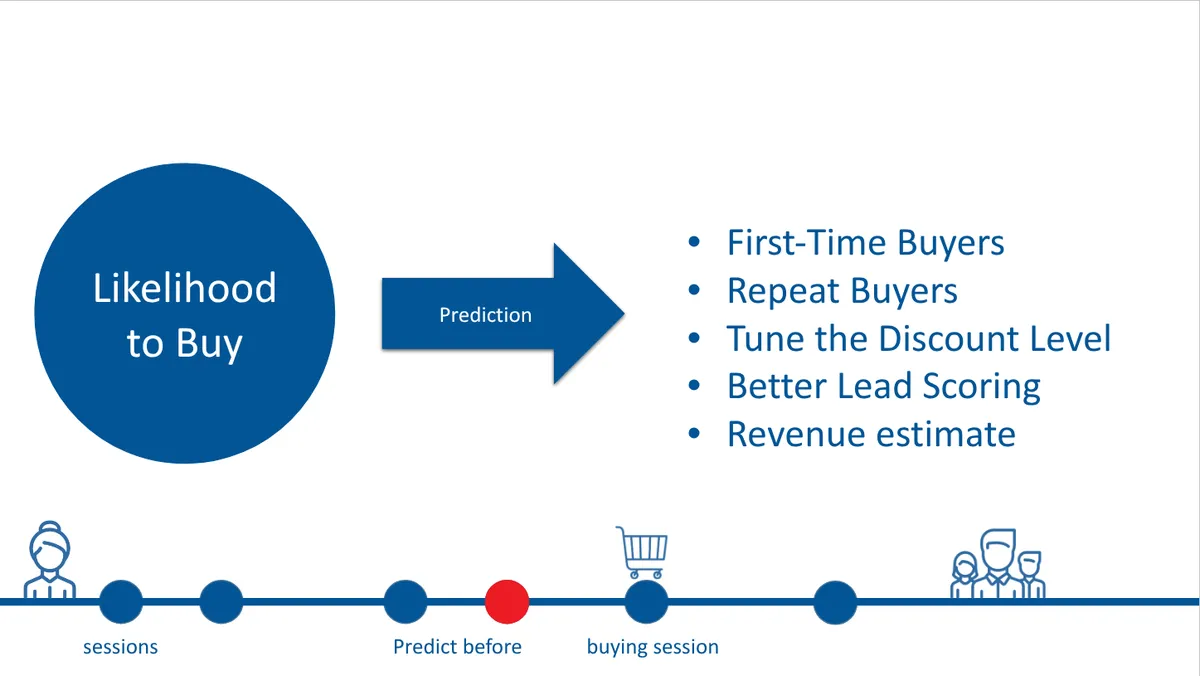
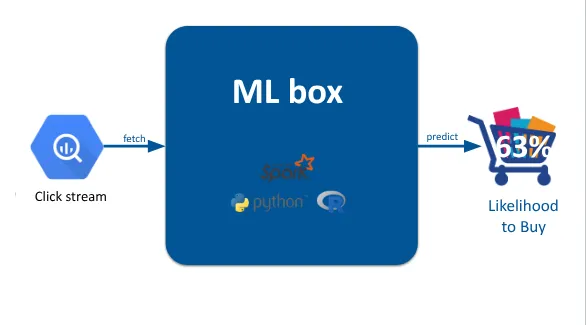
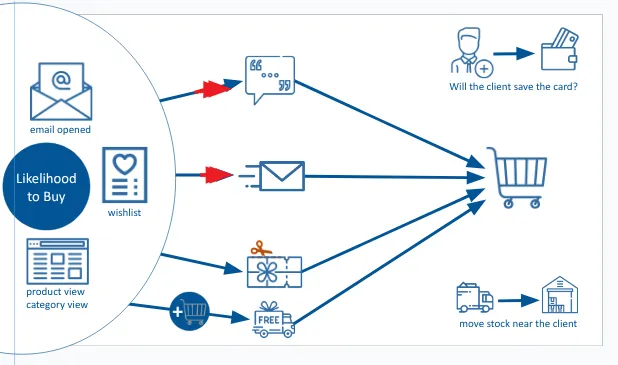
eMAG likelihood to buy prediction project eMAG ML box architecture eMAG conversion funnel optimization
  • Helped extract search into a dedicated Apache Solr microservice for Romania's largest e-commerce platform.
  • Reduced regression suite runtime by 90% and won an internal AI/ML innovation award for funnel-stage prediction.

Send a short project note →


Career log

A compact overview of recent roles, project work, and education.

AI Engineer, Cedara

Moved an advertising optimization agent from PoC toward production and connected ML decisioning to programmatic bidding workflows.

Maintained carbon-monitoring analytics pipelines and expanded social-media training datasets. Python, PyTorch, Scala, SparkML, Dataproc, OpenX API, Laravel, Airflow, GCP.

Senior Backend Engineer, Pentalog

Consulted for a major European investing platform inside a service-oriented architecture.

Maintained 99% unit test coverage, supported bi-weekly releases with 0% error rate, and added Datadog observability. PHP, Laravel, MySQL, Docker, Redis, Kafka.

Senior Backend Engineer, IsoSkills / Ezugi

Re-architected reporting reads onto a replica to reduce primary database load and improve operational headroom.

PHP, Symfony, API Platform, MySQL, Docker.

Fullstack Engineer, Ensysco

Delivered an admin platform for gas and energy providers with tariff logic and operational workflows.

React, Redux, PHP, Symfony, API Platform, MySQL/MariaDB, Docker.

Backend Engineer, Bandai Namco Entertainment Romania

Built a RESTful API from scratch for Retro Wonder Park, supporting backend gameplay and mobile integration requirements.

Senior Backend Engineer, eMAG

Helped extract the search API from a monolith into a dedicated Apache Solr microservice.

Won the Future Hacks 2.0 Innovation Award for funnel-stage prediction and reduced regression runtime by 90%. R, Python, Docker, SeleniumGrid.

Web Developer, Pathwwway

Moved from critical fixes into core gaming-platform development, player tracking, and QA automation training. Java, Selenium, Git.

Web Developer, XLTEAM

Delivered outsourcing projects including Rolii.ro, a legal portal indexing 5M+ court decisions, and Multibonus.ro, a MOL loyalty platform.

Junior Web Developer, Various Companies

Early roles at WebVenture, Customsoft, and The Shop Page. PHP, Agile.


Get in touch

Send a short note about the project, the problem, or the kind of help you need.


Built with Astro, self-hosted fonts, subset icons, and hand-authored CSS. This page ships through a gated preview route before any production port.