

Before ranking, a page has to become evidence
Common Crawl is not Google's Search index, but it gives the right mental model for on-site SEO: a page first has to survive fetching, parsing, rendering, extraction, and filtering. Page speed helps because it makes that record easier to collect and trust.
- Common Crawl as the public crawler mental model
- C4 as a cleaned Common Crawl-derived corpus
- A five-level on-site SEO hierarchy
- Measurement guidelines from HTTP status to LCP
- Five proposition-backed references

Search starts with a crawler asking: can I fetch, parse, and understand this page cheaply?
Common Crawl is the public reminder. It is not Google’s Search index, but it is the right mental model: the web becomes a dataset only after pages survive crawling, status handling, HTML parsing, link extraction, metadata extraction, and text extraction.1 Google’s C4 dataset, used for T5, was built from a cleaned Common Crawl snapshot.2
That is the on-site SEO lesson: your page is not a design first. To machines, it is a corpus record. Page speed is not decorative; it makes that record easier to collect and trust.
 The web becomes useful only after it becomes organized evidence. Photo by Priscilla Du Preez on Unsplash.
Conceptual hierarchy:
- Exist — the URL returns meaningful, canonical, indexable HTML.
- Expose — content, title, links, and metadata exist in the DOM.
- Prioritize — critical CSS, fonts, and LCP arrive before ornaments.
- Stabilize — layout does not jump; mobile works.
- Measure — Core Web Vitals are symptoms of usable delivery, not a game.
 On-site SEO has an order: existence before polish. Photo by Dan Freeman on Unsplash.
| Measurement | Guideline | SEO meaning |
|---|---|---|
| HTTP status | Real 200, 301, 404 | Crawlers classify the URL |
| HTML payload | Content visible without fragile client work | Extraction is less ambiguous |
| LCP | Improve the whole request chain | Important content appears early |
| CLS | Reserve space for media | The page is usable, not just fetchable |
| JavaScript | Delete, prerender, or defer | Rendering queues are not content strategy |
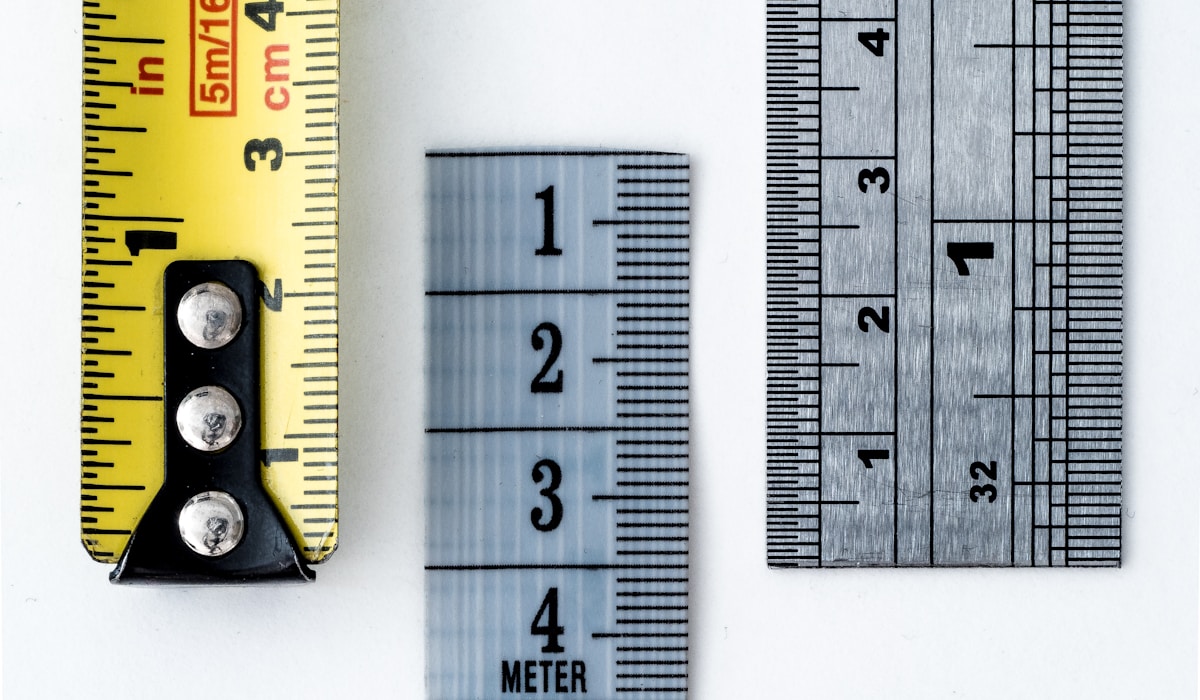 Measure delivery, not vibes. Photo by William Warby on Unsplash.
Optimize as if the page will be read twice: once by a browser, once by a crawler turning it into evidence. If the browser waits on decorative JavaScript, the crawler may wait too. If links only exist after brittle client routing, discovery becomes conditional.
Fast pages are not guaranteed to rank. Slow pages are not automatically bad content. But when many pages answer the query, the one that is easier to crawl, render, measure, and use has fewer excuses.3
Propositions
1. Corpus builders need fetchable, parseable pages before evaluation. Common Crawl’s archive is built from raw web captures, metadata, and extracted text. That means the first SEO question is not “does this page persuade?” but “does this page become a usable record?” Broken statuses, hidden content, unstable markup, and crawl-hostile scripts fail before quality can even be judged. See R1.
2. Crawl data can become machine-learning material after filtering. Google’s C4 dataset, introduced with T5, was created by cleaning a Common Crawl snapshot. The important SEO analogy is not that Google Search equals C4 — it does not — but that messy public pages can become model-readable text only after aggressive filtering. Clear HTML, stable language, and extractable main content survive that kind of pipeline better. See R2.
3. Page experience matters, but it is not one magic signal. Google frames page experience as a set of signals about how people experience a page, not a single switch that overrides relevance. That should make on-site SEO calmer: speed work is not a trick for ranking bad content. It is friction removal for pages that already deserve to be considered. See R3.
4. Prerendering helps because content is present earlier. JavaScript can be rendered by Google, but every extra rendering dependency is another condition between the crawler and the content. Prerendered or server-rendered HTML gives crawlers titles, links, copy, and structured hints sooner. That is why performance architecture and SEO architecture are often the same conversation. See R4.
5. LCP work is request-chain work, so it overlaps with SEO. LCP is not just “make the big image smaller.” The browser has to discover the HTML, discover the resource, download it, decode it, and paint it. Each delay hides the page’s main promise from users and measurement systems. Optimizing LCP is therefore an on-site SEO act: it makes the important thing arrive early. See R5.
Reference Sources
- R1: Common Crawl Overview
- R2: T5 / C4 paper
- R3: Understanding page experience in Google Search results
- R4: Understand JavaScript SEO basics
- R5: Optimize Largest Contentful Paint
Footnotes